Notes on a Novel: Dr. Lorenzo Johnston Greene

Since I’ve been busy not paying attention to this blog, I have progressed beyond Writing the Bones, my previous segment on the writing of my 1st conceptual verse novel. The skeleton is solidly formed and now it’s time to put meat on the bones, so to speak. The next segment, in my progression, will be based on the pages upon pages of handwritten notes on the book whose title I’ve narrowed down to three choices.

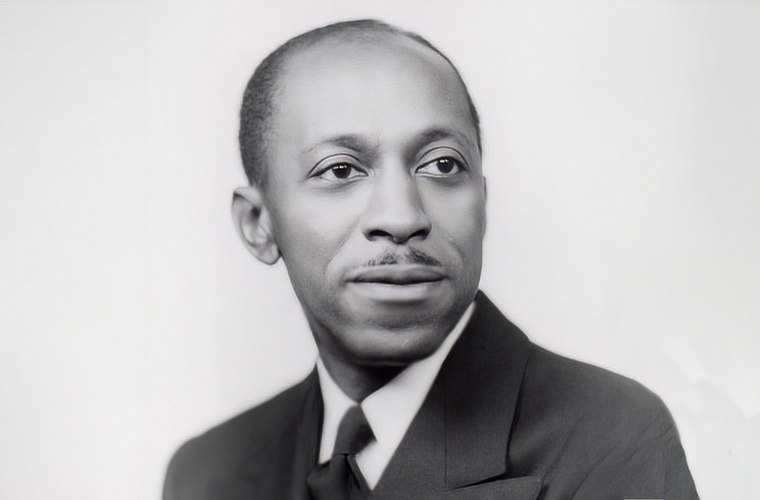
One of the characters in my book is Dr. Lorenzo Johnston Greene, historian. Dr. Greene published a book called The Negro in Colonial New England. Even though I went to elementary, middle and high school in Boston, this book was never part of any curriculum I encountered; not even in my year and a half at Emerson College. I don’t remember exactly how I came across this very informative (read detailed) book. It was either in a semi-recent history class at a local university or it was in Wendy Warren’s book, New England Bound: Slavery and Colonization in Early America. Either way, it was recent enough to be pissed that I was in my early 50’s when I found out about his scholarship, which is impeccable, btw.

But that anger is for another potential post about the state of education in this country. The purpose of this post is to discuss, somewhat, the role he plays in my novel. He is an angel to use Christian parlance. He is also a time traveler who uses his angelic abilities and his training as a historian to resolve a matter that had needled him in his professional life. In The Negro in Colonial New England, the matter that concerns him enough to affect his afterlife is nothing but a one line footnote. That disturbs him because the matter involves a rape. However, his chosen profession is limited by the tenets of histography and requires a poet to contextualize the pieces missing from the historical record. So he functions as a historian and a buffer against what he calls the poets “Africanist flights of fancy”.

It’s definitely a balancing act, navigating between the poet and the historian; especially since I like the poetic bits more!

That’s all for this week. Next week, I’ll talk about a different character.
Writing the Bones, Entry 2

. . . the Second of October, about 9 of the clock in the morning, Mr. Mavericks Negro woman came to my chamber window, and in her own Countrey language and tune sang very loud and shrill, going out to her, she used a great deal of respect toward me, and willingly would have expressed her grief in English; but I appre- hended it by her countenance and deportment, whereupon I repaired to my host, to learn of him the cause, and resolved to intreat him in her behalf, for that I under- stood before, that she had been a Queen in her own Countrey, and observed a very humble and dutiful garb used towards her by another Negro who was her maid. Mr. Maverick was desirous to have a breed of Negroes, and therefore seeing she would not yield by perswasions to company with a Negro young man he had in his house; he commanded him will’d she nill’d she to go to bed to her, which was no sooner done but she kickt him out again, this she took in high disdain beyond her slavery, and this was the cause of her grief.
—John Josselyn, Two Voyages to New England, 1674 Source

This unnamed woman is the subject of my novel. I am haunted by the thought that there has to be more to her than “the cause of her grief.” But the historical record provides nothing and possibly never will. So I decided to take Toni Morrison’s advice and write the book I want to read. Since it is a haunting, I’ll be writing it as a kind of ghost story. However, one person’s ghost is another person’s ancestor. To quote Miriam Makeba:

In the West the past is like a dead animal. It is a carcass picked at by the flies that call themselves historians and biographers. But in my culture the past lives. My people feel this way in part because death does not separate us from our ancestors. Source

But before we start, we must follow protocol and awaken her.

Writing the Bones, Entry 1

Writing a novel is harder than I ever conceived! I’ve written and published books of three books of poetry but those books are full of personal poetry arranged chronologically. They’re linear rather than a cohesive whole like a novel.

When I first got the idea of writing a novel, I spent years typing down whatever came to mind and only casually organized them in Google Docs. Then, being a poet, I decided it had to be a verse novel and/or epics. I started reading to gain a sense of the genre.

I read The Epic of Gilgamesh, the David Ferry translation; Sundiata: An Epic of Old Mali; The Epic of Askia Mohammed, etc. After reading Gilgamesh and Sundiata, I came away with a new book idea centered about one of the women mentioned in Sundiata. As a womanist, it was disturbing, to say the least, how rape played a role in both epics but was treated both briefly and casually. I started thinking about how there are no epics where women are centered. So I spent even more time typing out an outline for that future story/book.

I read Jacqueline Woodson’s Brown Girl Dreaming; tried to read both Derek Walcott’s Omeros and Kwame Dawes’ Prophets. Of the three, Brown Girl Dreaming was the most approachable. The beginning of Omeros contains a poem about the cutting down of trees to make canoes. Have you ever eaten anything that was so good, so rich, you couldn’t finish it and told yourself you’d save it for later but never do; because when you go to eat, you’re still full off of the memory of how good it was? That’s that poem, a portion of which was excerpted here. I think I was too full of that one poem in Omeros to give Prophets the attention it deserves. Plus, by that time, I was burnt out on reading the genre.

That was years ago. Today, literally and figuratively, I am in writer’s mode and writing a verse novel is hard. One of the difficulties I’m encountering is the setting of the novel. It’s set in Massachusetts Bay Colony in the 1630’s. How to cross the language barrier because their English is not the English of today. Then, there’s my main character, an enslaved woman, unnamed in the historical record, who was probably one of the victims of English privateers (legalized piracy) pillaging the ships of England’s greatest competitor of the time, Spain and it’s settler-colonies in the Caribbean/South America. Because of the relative earliness of her being enslaved, she undoubtedly spoke her mother’s tongue; maybe even picked up a few Spanish words on the brutal trip to what is inexplicably called the New World.

I assumed I would have to build a language for her so we could communicate. More research was called for! I did a Google search for Spanish-African creole. I figured that just like with English, there would be a language created out of the experience of the enslaved and I was right! In Colombia, there’s a region called San Basilio de Palenque. Known as the “first free town in the Americas,” I was delighted to hear about the language the inhabitants speak as the island in the Caribbean my main character was Providence Island, now under the domain of Colombia; even though the language might be dying from underuse, it was a step forward. Or so I thought. Poetry to the rescue:

small stones of spanish skimming
the surface of her speech
the closer to the atlantic
her body was forced

‘My god is more of a god than your god is ungodly – the same applies to languages,’ says writer Ngugi Wa Thiong’o | art and culture | Hindustan Times

Which books have been important in your life? And how did you, the son of a peasant, get to write one in the Kenya of the ’60s?

While growing up, we had no books in Gĩkũyũ, my mother tongue. The Bible’s Old Testament became my book of stories. In high school, when I saw a library for the first time, I had the ambition to be able to read all the books in the world. But guess what? I couldn’t even finish reading all the books in that library! Later, in 1959, I went to Makrere University College in Kampala (Uganda) that was part of the University of London. In 1962, at the first conference of African writers coming together on the African continent, called the Makrere Conference of Writers of English Expression, Chinua Achebe looked at my manuscript of Weep Not… and made a few comments. Achebe’s book Things Fall Apart had been published a few years ago. He told his publishers about my book. It was an important moment in my life. George Lammings’s [an important figure in Caribbean literature] work has also been important for me.

Source: ‘My god is more of a god than your god is ungodly – the same applies to languages,’ says writer Ngugi Wa Thiong’o | art and culture | Hindustan Times

Beauty

Beauty is in the eye
of the beholder
and I be holding beauty
when I glance upon them
theoretically shaping
the future into an afro
centric sharpness
that shook
the white power structure
into confronting
black consciousness
organized and mandated
to dismiss
that old time religion
that said everything in its place
especially the black race.

A new paradigm of blackness
rooted in a communal soliloquy:
ghetto equals colony
and racism is the bastard child
of fascist economies.
Fanon, Malcolm and James
became antidotes
for antiquated theologies
and anti-social pathologies.

In the belly of the imperialistic beast,
in the macro-and-microcosms
of streets and prisons
a new paradigm, a paradise
of struggle
created by ex-soldiers
high school and college students,
whores, pimps, drug dealers
NASA employees,
doctors and number runners
heady, ready and willing.

From Watts to the Congo
white power has gotta go
burn baby burn
no ashes in the urn
time for the tide to turn
and put an end to the yearn.

Discern:

Panther power was here
turned the police into pigs
and nigs into blacks
figuratively burning effigies
with tactics and strategies
that earned them freedom’s mind.

George Washington Quote

I am currently finishing up the research phase for my 4th book and I came across this quote from George Washington:

“For my own part, I shall not undertake to say where the Line between Great Britain and the Colonies should be drawn, but I am clearly of opinion that one ought to be drawn; & our Rights clearly ascertaind. I could wish, I own, that the dispute had been left to Posterity to determine, but the Crisis is arrivd when we must assert our Rights, or Submit to every Imposition that can be heap’d upon us; till custom and use, will make us as tame, & abject Slaves, as the Blacks we Rule over with such arbitrary Sway.” Source

The part that “triggers” the creativity for this soon-t0-be book is not the derogatory way he describes the enslaved people who made him wealthy but the phrase “we rule over with such arbitrary sway”. Arbitrary means what it means and when coupled with enslavement, it says a whole lot about the white privilege of the colonial era and what that white privilege gave birth to…Manifest Destiny.

What does this quote mean to you?

Hercules

The crisis is arrived when we must assert our rights, or submit to every imposition, that can be heaped upon us, till custom and use shall make us as tame and abject slaves, as the blacks we rule over with such arbitrary sway.

–  George Washington


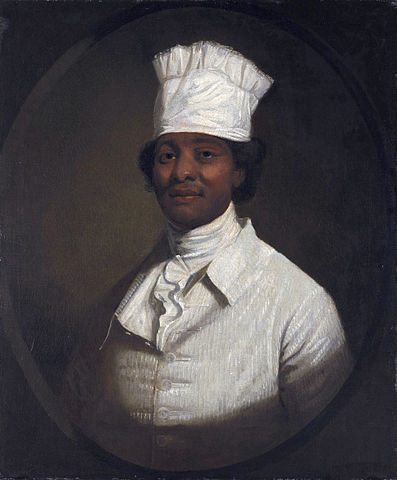
Hercules (possibly) Slave prettily pretending
on the promenade.
A plethora of coins
pushing a false narrative
But then

he was sent from the city
of brotherly love
to break rocks
and dig in the mud
for material
to shore up a house
he can only enter from the back.

Hands that used to craft meals
which earned him accolades appropriate
for the free
are now stiff, swollen
and seditious.

Back on the plantation
the enslaved called low vermin
his six year old daughter was asked
if she missed seeing her father.

“He is free now.”


For more information about Hercules, check out the following links:

http://www.npr.org/2008/02/19/18950467/hercules-and-hemings-presidents-slave-chefs

Recollections and Private Memoirs of George Washington

http://www.mountvernon.org/digital-encyclopedia/article/hercules/#note4

An Emotional Review of A Brief Review of Seven Killings by Marlon James

(Originally posted on my book review blog, Diary of a Mad Reader)

I am someone who reads books that break my heart, time and time again. The Book of Night Women broke my heart. Apparently, A Brief History of Seven Killings, which I’m 14 pages away from finishing, is going to do the same. And they’re both by Marlon James.

I so want to say that I hate him and his damn novels but that wouldn’t be true. They resonate too deep for hate. The Book of Night Women stayed with me so long I was extremely reluctant to buy A Brief History. I waited; saw it in my favorite bookstore, saw it win prestige and still said I ain’t buying fucking bullshit that breaks my fucking heart. I nah fi do it.

But…

Marley

whose music reached me before Prince.

Marley

whose reggae connected me to my family in a way no other music does.

And so I bought it…and started reading.

Fucking Marlon James, man. I mean, damn.

I can’t fault him for his knowledge, or sense, of history. I can’t fault him for me reading past the sick ass murder that occurred in the first few pages. I can’t fault him anymore than I could fault Dylan for Masters of War or NWA for Fuck the Police or War for The World is a Ghetto because neither him or Dylan or NWA or War are the originators of this violent ass world I’m raising my son in.

I can’t even fault him for my reaction to a book that I haven’t yet finished, although I only have 14 pages left out of a 686 page novel. I can’t fault him for me feeling sorrow for the fictional psychopath Josey Wales. I can’t fault him because he’s an honest writer. His research is solid. His writing is beyond great. I can’t do anything but finish the novel, post this review and this song…

Selassie I Jah Rastafari

Addendum: I just finished the book. Considering the deranged violence that occurred throughout the book was that I would end it smiling and happy but I did! I’d read the whole tome all over again just to read that ending but first, I need a year or two to recover, just like I did with The Book of Night Women. With this ending, I do believe Marlon James has joined my very small list of favorite writers.

Gospel

i.

discordant
never/
polyrhythmic
like life
we were/
in the beginning/
many feet make many sounds

we took the tree
and made it talk/
a jungle of sounds
we produced
everyone for miles around
heard it
gravitated towards it

then strangers came
chanting like gregor
tolling the bell
like igor

creating a cacophony
a frankenstein sound
that we ran from/
the reverberation of our feet
and the clamor of our pursuers
disturbed the serenity of the forest
forever

ii.

our feet were forced
to wade in the water
and the god the strangers proclaimed
didn’t trouble the waters
enough

we moaned
a sound as new to us
as the clang of metal when we shifted
as the strangely accented voices
ordering us to stop the dirges

but we couldn’t stop
even after the ship docked
even after survival dictated
that we scale down our humanity.

Out of our misery grew the gospel.


Excerpted from my first book, In the Whirlwind.

©2006 Tichaona Munhamo Chinyelu