Reading Round-up 3.3.15

As of this date I have accomplished the monumental task of reading two books from start to finish. It might seem counter- intuitive for a writer to have a problem completing the reading of a book but such is the nature of my life now. The two books read were Watershed by Percival Everett and Brown Girl Dreaming by Jacqueline Woodson.

Watershed – I don’t know what I think/feel about this book. I read it and continued reading it waiting for some “action” to happen.  Considering that the story involves Black Panther history as well as the Indigenous struggle at the Pine Ridge reservation, some action was bound to happen, was it not? However, whatever action did take place seemed muted by the main character, a hydrologist named Robert Hawks’ emotional disconnect. I am not yet sure whether that is an indication of the author’s talent or my response to the novel’s very understated action scenes. I will say this: at the end of the novel, after wading through various chapters being prefaced by hydrologist jargon, I felt like the author was smacking me, the reader, by stating that the prefaces were fictional. In researching the author, I discovered that he is considered a satirist or at the very least includes aspects of satire as one of his literary tropes. I’m just not sure yet whether I appreciate that or not. I shall have to read another book or two of his to figure it out.

Brown Girl Dreaming – First of all, chalk it up to my ignorance that I was surprised to find out on opening the book that it was poetry. I don’t pay as much attention as I should. That aside, from start to finish, Brown Girl Dreaming was a delight. So much so, I plan on it being the foundation of a poetry unit for my home-schooled son.

Deeper than that, however, is the strong sense of love and peace I felt upon finishing the book. In that way, it reminded me of how I felt when I finished Clare of the Sea Light by Edwidge Danticat. Some writers have the incredible ability to write in such a way that reading their works opens up the gentleness of the world. Considering that the world isn’t truly a gentle place, that is a remarkable achievement.

Not Your Average Slave Movie (A Book of Negroes Review)

First of all, I want to reiterate the statement inherent in the title of this blog post: that Book of Negroes, which aired recently on BET, is not your average slave movie. It is a movie about a free young girl in Bayo, Guinea who became an enslaved woman in colonial America; who worked for the British side during the American Revolution; who, when the British evacuated New York, managed, ultimately, to get on the flotilla of ships leaving for Nova Scotia; who, after Nova Scotia was discovered to be a new sort of hell, lobbied British parliamentarians to tailor their plans for a colony in Sierra Leone to fit the “Nova Scotians” (one of the terms used to describe the formerly enslaved people). In other words, Aminata, the lead character and narrator of this historical fiction (portrayed extremely well by Aunjanue Ellis), was Harriet Tubman before Harriet herself was Harriet or even Araminta Ross. She didn’t require Harriet telling her Black Loyalist community her version of “freedom or death” in order to get them to continue on the journey they themselves started.

Second of all, if the history of black repatriation to Africa interests you, read historian Cassandra Pybus’ book, Epic Journeys of Freedom,. This book, which is continental in scope, details some of the foundational stories underpinning Lawrence Hill’s historical fiction novel, known in the US, as Someone Knows My Name (because of potential backlash against the word ‘negro‘). Before Paul Cuffe, before Marcus Garvey, 3,000 formerly enslaved Africans picked Britain over America, chose Africa over Nova Scotia and ardently advocated for the freedom to run their new home, the Province of Freetown themselves. So dedicated to being completely, some of those “Nova Scotian settlers” were tried for mutiny and/or sedition by the British. Some ended up exiled from the Province. Others were sold back into slavery in the Caribbean. The list of people who undertook this historic struggle includes Harry/Henry Washington who had freed himself from enslavement to George Washington; Daddy Moses (Moses Wilkinson), blind, crippled yet still bound for freedom; Thomas Peters, born in what we now call Nigeria, who tried, three times, to escape before finally achieving success as a result of his service to the British during the American Revolution.

The politics of the matter covered, I now want to get to the heart of the matter. The real beauty of Book of Negroes is that it is a love story. It is extremely rare when we get to see black men and black women on the big or small screen loving each other in a way that practically defines the word love. Under the most extreme of circumstances, Aminata and Chekura, despite the dysfunction of their first meeting, are able to bond in such a way that their love survives their initial meeting, decades of enslavement, runaway status in New York, the cold, rocky land of Nova Scotia and ends up in Freetown where Chekura meets his heroic end. There have been love affairs between the enslaved depicted before. The one that immediately comes to mind is between Six-o and the Thirty-Mile Woman, so-called because Six-o walked thirty miles to be with her. Of course Toni Morrison’s Beloved is a fictional exploration of the reality of Margaret Garner but it has been historically demonstrated that the enslaved sort to build and maintain love and familial connections throughout of enslavement, despite the anti-family nature of the institution.

The narrative of most slave movies are usually dominated by men, whether black or white, enslaved or free. From Roots to Glory, from Amistad to Django, the male perspective  dominates. In Book of Negroes, it is a woman, Aminatta herself, who tells her story. Because of that, we, the audience, gets to witness aspects of enslaved women’s lives usually ignored or marginalized. For example, there is the very brief scene where Georgia who, in the hierarchy of the enslaved plantation community, functions as a doctor/mother figure, gives Aminata a tea to drink which would protect her against unwanted pregnancies. There is also the character of Berthilda Mathias, a freeborn woman married to a runaway who Aminata meets in New York.. When Berthilda’s husband gets taken off the ship headed to Nova Scotia by British soldiers (obeying the dictates of the Treaty of Paris which demanded the return of the “property” of America’s founding fathers as well as newly American plantation owners), she decides to relocate her and her daughter to the Georgia her husband escaped from in order to free from slavery. All throughout this movie (and book) the connection the enslaved had to each other was fought for and honored.


**** I don’t know if BET, the channel Book of Negroes aired on, will show it again. However, Book of Negroes can be viewed on the Canadian Broadcasting site.****


Throwback Thursday (1)

Several years ago, I, along with fellow members of an online poetry group agreed to participate in a poetry challenge. I don’t remember the exact perimeters of this particular challenge. I remember it had something to do with music. I remember I chose the song below

and wrote the poem below that for the challenge.

Song: History of Africa by The Classics:

Poem: Blood Will Tell (My Mother’s Song)

While my older cousins were upstairs
doing the hustle and other disco dances
I was downstairs, ingesting
with all the delight my seven yr old self
could muster
the nice history of Africa.

Then my mother and I moved
and the song got packed away
lying dormant in the quiet storm of my blood
while I gravitated towards Michael Jackson
and the music flowing at neighborhood block parties.
i joined one nation getting down
just for
the funk of it
and learned how to dance under water
without getting wet
from swim instructors/block mothers.

but my blood knew it wasn’t a done deal
knew I would find my way back
to the nice history of Africa

and I did

some twenty years later
when I took one of my bi-annual trips
back East and raided
my mother’s closet for my history.

And there it was, my mother’s song
carried all the way from London
more than twenty years ago,
still in pristine condition.

I stowed it away, carefully
and when I arrived back in Cali
quietly deposited it between Prince albums
and 12 inch versions of Rapper’s Delight
and I Feel for You.

Never listening, only reading
the nice history of Africa
until my Jekyll and Hyde man
knew that, this time, I was serious
about leaving him
and stole my record player
in preemptive retribution.

I told myself that’s it
no more music for me
and donated all my records
to a community store;
too distraught to realize
I was also giving away
my mother’s song
the nice history of Africa

and when I awoke, it was too late
and I was never able to find
the song again
until one day, I did a blood-driven
internet search and there it was
the nice history of Africa

and my blood settled
coming full circle
with all the delight
a thirty-seven year old
could manage.

Excerpted from my book In the Whirlwind

ExiSextial

A six month hiatus and complicated alliterative lines derails my mind and sends me. A poet to my core, I read for sustenance and my home is the antithesis of a book desert. The other night I was disturbed in the middle of a line. Thrust upon until I recognized need. Frustration squared.  Go away. Come closer. Orgasmic. Isolationist. This is me now.  Forty and fuckable. Forty and fortified. Forty? Closer to fifty.

This is knowing. This is expression of the no longer dormant, dormouse clitoris, the forsaken nub of flesh. Empty vagina used to convulsing in on itself, welcome to the pleasuredom.

This is knowing I don’t want the snuggling or afterglow to outlast inspiration that arrives out of the blue, that needs to be written down, recorded and recreated with no notches or markings of kills.

I walk solo and when I ran, I ran solo. Huffing and gasping. Conniption bound, solo. This is me remembering running, remembering inedible meals of rice noodles and vienna sausages masquerading as spaghetti and meatballs. This is me assuaging the need, yours and mine, channeling it back into the pen while the ink still runs.

A pelvis is how paleontologists determined that the oldest bones in the world, our mysterious yet venerated ancestor, Lucy. Another factor is canine teeth and I bite into my ignorance.

The man who secrets and succors explores and secretes. He is my dreamscape and when I wake, he is there as well.  Uncategorically. He can also disperse like ether.  But not now. Now he is drawing me away from the keyboard, away from the Great Rift Valley, away from the Lower Awash, away from canine teeth and ancient pelvises into the here and now world of he and I.

Homeschooling Journey 1

My son loves mythology. I have invested quite a few dollars and I don’t know how much energy in meeting his mythological needs. From D’Aulaires’ Book of Greek Myths to D’Aulaires’s Book of Norse Myths, it seemed as if we had gone around the world of myths but one day, during a geography lesson, he realized we had been missing a continent or two and that the world wasn’t actually represented by the two books mentioned above. So we went looking for myths that reflect the fact that the world actually consists of seven continents (or six for this purpose). We also went looking for the types of mythological figures who have power like Zeus yet who also shared my son’s pigmentation. A Google search yielded results that can be seen here.

In the process of researching African myths, specifically, we found the following statement on mythencyclopedia.com to be  true:

The line between legend and history is often blurred.

The path toward a deeper understanding of what that statement means led to a detour into the difference between epic and myth.

Odysseus is an epic that tells us about the mythology of a portion of the ancient Greek world as retold by Homer. It tells us (or maybe just me) that Odysseus was a jerk of the variety that upholds the opinion of the minority over that of the majority. (Didn’t his crew implore him to head home but he overruled them? The opinions of the working class seemed not to hold much sway in ancient Greece.)

Sundiata, an Epic of old Mali, “yes, he was born from a Buffalo Woman, yes, he was crippled during when he was little but he still didn’t have any powers like Poseidon. Poseidon could part the waters like Jesus!”

The Epic of Askia Mohammed: I didn’t even bring this one into our fluid classroom. Something about the following passage made it something I did not want to pass onto my son as “epic”:

As he approaches the prayer skin of his uncle,
He reins his horse.

He unslung his lance, and pierced his uncle with it until the
lance touched the prayer skin.

Until the spear went all the way to the prayer skin.

[Mamar Kassaye decides to atone for the killing of his uncle by making a pilgrimage to Mecca in 1497. On his way, he forces many people to accept Islam.]

In each village where he stopped during the day, for example, this place,

If he arrives in mid-afternoon, he stops there and spends the night.

Early in the morning, they pillage and they go on to the next village, for example, Libore.

The cavalier who goes there traces on the ground for the people the plan for the mosque.

Once the plan for the foundation is traced,
The people build the mosque.

It is at that time,
Mamar Kassaye comes to dismount from his horse.

He makes the people—

They teach them verses from the Koran relating to prayer.
They teach them prayers from the Koran.
Any villages that refuse, he destroys the village, burns it, and
moves on.


Let me just take a moment and repeat that last line:

Any villages that refuse, he destroys the village, burns it, and

moves on.

Any African-centered student of African history knows what that means. For those of you who are not an African-centered student of African history what that means is the imposition of Islam over traditional African cultures and religions. As evidenced from “any villages that refuse, he destroys the village, burns it…”, the imposition was undoubtedly as violent as Christopher Columbus’ voyages and my family doesn’t celebrate Columbus Day.

The same goes for Mansa Musa and his economy-devastating trip to Mecca. This, despite, a caravan which included

60,000 men, 12,000 slaves who each carried four-pounds of gold bars, heralds dressed in silks who bore gold staffs, organized horses and handled bags… 80 camels, which varying reports claim carried between 50 and 300 pounds of gold dust each


(This did yield mini-units on camels, the masons of mali and the Festival in the Desert).

Disclaimer: All text in this post attributed to author’s son is strictly the author’s interpretation of facial expressions, body language, etc., of said son and, as such, constitutes a work of fiction unless otherwise indicated. Disclaimer dictated by the author’s interpretation of said son’s response to post.


Handmade Books

The other day, roaming around my internal universe, I thought to myself, why not hand make your next book? Knowing next to nothing about the art, I went straight to Google. The best tutorial I saw was on thelateafternoon.com although my book is not going to be a scrap book so the idea of using cardboard, even well-disguised cardboard, for the material wasn’t embraceable.

On to YouTube where I found the following video:

This one seems more my speed and the place for the poems that I’ve been holding onto. It’s exciting (read rejuvenating). I have several poems just sitting waiting to be part of a book whose finish date seems getting further and further away from me. I realized I may have been thinking about the whole process incorrectly. Even though I have ISBNs somewhere collecting dust, I don’t have to go that route. I can make a little book out of those orphan poems with my very own hands.

Making my own books is something I’ve always pondered even though before this recent cognition, the ponder was located in the black hole of the universe mentioned above. As such my ideas hadn’t yet traveled the distance from the source long-buried thought to today’s age of technology. When I talked about this project with my son, he took pains to inform that he had done this already in his former classroom. Well, “don’t you feel dumb now, Mom, don’t cha?”

Well, yes, I do. But my dumb self is also very excited! And so are the orphaned poems!

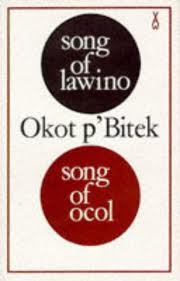
The Resurrecting Writers Series: Song of Lawino & Song of Ocol (Repost)

Today being #tbt, I thought I’d reblog a previous book review. I started reading this because I love poetry, yes but also as part researching verse novels and/or epics.

Tichaona Chinyelu's avatarTichaona Chinyelu

image Taking the book solely at face value, Song of Lawino & Song of Ocol are verses concerned with the disintegration of the marriage of Lawino, a rural African (Acoli) woman and Ocol, her western-educated husband. However, peeling back the cover of the words even a tiny bit reveals a woman committed to her indigenous culture versus a man who thinks that her culture needs to be removed from the face of the earth. How could two such people co-exist in the same household? How could two such differing ideologies co-exist on the same planet? According to Ocol, not at all. His song is full of imagery that calls death upon the culture Lawino praises in her song.

We will smash

The taboos

One by one,

Explode the basis

Of every superstition,

We will uproot

Every sacred tree

And demolish every ancestral

shrine.

In Ocol’s song, the thing that is so…

View original post 537 more words

Boston Underground Railroad Tour #1

This year I started homeschooling my ten year old son. I won’t go into the whycomes…in this post at least. The other day I took him on the first stage of what I call our Boston Underground Railroad tour. Looking at the list of houses on the site, I determined the William Ingersoll Bowditch house was the best (read closest) option on a wintery day. So off we went.

My son in front of the William Ingersoll Bowditch house.

There was no plaque or anything to reference the house’s history, as you can see. Even given the fact that black history is marginalized, I still felt disappointed by the lack of recognition but as usual, I turned it into a teaching moment.

Questions I asked my son:

1. Why do you think there is no plaque or recognition?

His response? “I don’t know.”

Me: I’m not asking you what you know. I’m asking you what you think.

*crickets*

Since there was nothing to see that tied to the history, we left. The next stop will be the Mount Auburn Cemetery

Freedom Rider: Ferguson’s Reckoning for Obama

“In the week since the grand jury announcement was made, Barack Obama has done nothing but insult the intelligence of millions of black people. His grand announcement for federal funding of police body cameras should be met with loud derision. After all of the hope placed in Obama, the end result of his presidency is nothing but a proposal that every school child knows. The constitutional lawyer in chief who commanded such love and loyalty once again comes up empty when black people are in need.”

newsfortherevolution's avatarNews for the Revolution

By BAR editor and senior columnist Margaret Kimberley
December 3, 2014
Black Agenda Report

Ferguson signifies the end of the age of Obama. It is a very sad end.” – Cornel West

“For Wilson to publicly say that he would kill Brown again is too much for a grieving people to bear.”

For nearly six years black Americans have supported President Barack Obama overwhelmingly, only to be treated with disdain. He has gotten away with this disrespect because of misplaced allegiance to racial solidarity and racist attacks against him. But the day of reckoning may have finally arrived via Ferguson, Missouri.

The non-indictment of Darren Wilson for the killing of Michael Brown may well be the catalyst for a much needed change. Not only did Wilson get away with murder, but like Emmett Till’s killers sixty years ago, he brags about it to the press. A prosecutor who was clearly…

View original post 743 more words