Writing the Bones, Entry 2

. . . the Second of October, about 9 of the clock in the morning, Mr. Mavericks Negro woman came to my chamber window, and in her own Countrey language and tune sang very loud and shrill, going out to her, she used a great deal of respect toward me, and willingly would have expressed her grief in English; but I appre- hended it by her countenance and deportment, whereupon I repaired to my host, to learn of him the cause, and resolved to intreat him in her behalf, for that I under- stood before, that she had been a Queen in her own Countrey, and observed a very humble and dutiful garb used towards her by another Negro who was her maid. Mr. Maverick was desirous to have a breed of Negroes, and therefore seeing she would not yield by perswasions to company with a Negro young man he had in his house; he commanded him will’d she nill’d she to go to bed to her, which was no sooner done but she kickt him out again, this she took in high disdain beyond her slavery, and this was the cause of her grief.
—John Josselyn, Two Voyages to New England, 1674 Source

This unnamed woman is the subject of my novel. I am haunted by the thought that there has to be more to her than “the cause of her grief.” But the historical record provides nothing and possibly never will. So I decided to take Toni Morrison’s advice and write the book I want to read. Since it is a haunting, I’ll be writing it as a kind of ghost story. However, one person’s ghost is another person’s ancestor. To quote Miriam Makeba:

In the West the past is like a dead animal. It is a carcass picked at by the flies that call themselves historians and biographers. But in my culture the past lives. My people feel this way in part because death does not separate us from our ancestors. Source

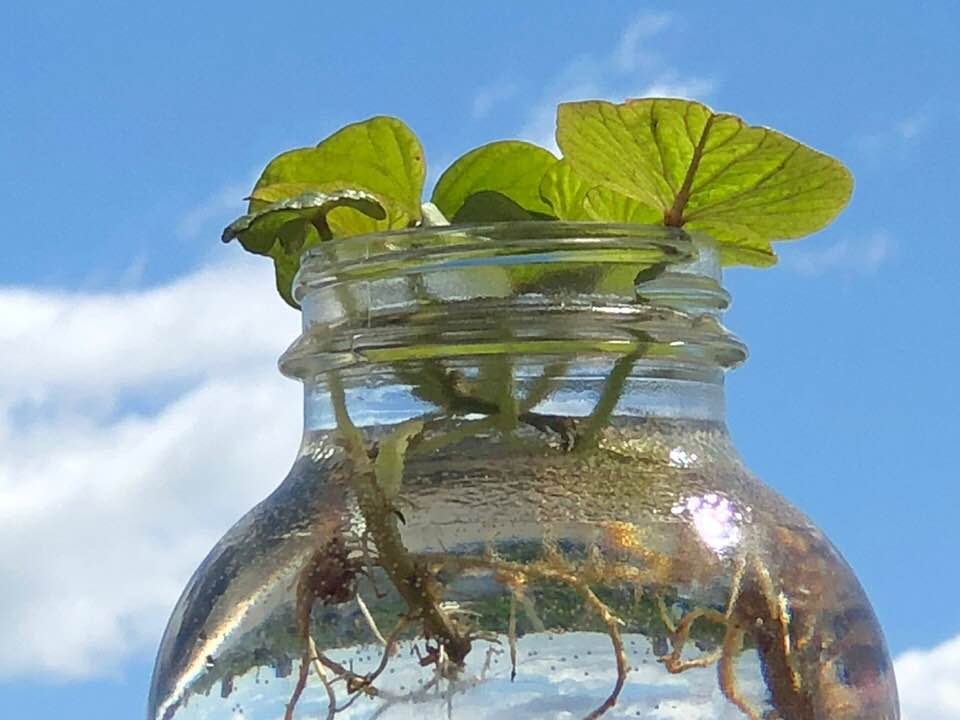
But before we start, we must follow protocol and awaken her.
Diary of a Writer, vol. 2

Sometimes, the process of writing doesn’t require you to put pen to paper or click away at the keyboard. Sometimes, it involves sitting still on the balcony, looking at cars going where they’re going; looking at the sky and skyline; noticing the trees are an arcing line of shadow at night, scarier, almost, than the way lights are always blinking away the dark – from the casino a city or two away to the red flickering lights on top of buildings just a hop, skip and jump away from where I am.

Sometimes writing involves reading. Escapist lit. Or not. Sometimes, it involves reading about books you want to get but instead look at the growing pile of unread books surrounding you, and just click save before you get consumed by paper like poor Tuttle here:

Sometimes writing involves a stream of consciousness blog post on writing, full of run on sentences and a woeful lack of lyricism just because…

Writing the Bones, Entry 1

Writing a novel is harder than I ever conceived! I’ve written and published books of three books of poetry but those books are full of personal poetry arranged chronologically. They’re linear rather than a cohesive whole like a novel.

When I first got the idea of writing a novel, I spent years typing down whatever came to mind and only casually organized them in Google Docs. Then, being a poet, I decided it had to be a verse novel and/or epics. I started reading to gain a sense of the genre.

I read The Epic of Gilgamesh, the David Ferry translation; Sundiata: An Epic of Old Mali; The Epic of Askia Mohammed, etc. After reading Gilgamesh and Sundiata, I came away with a new book idea centered about one of the women mentioned in Sundiata. As a womanist, it was disturbing, to say the least, how rape played a role in both epics but was treated both briefly and casually. I started thinking about how there are no epics where women are centered. So I spent even more time typing out an outline for that future story/book.

I read Jacqueline Woodson’s Brown Girl Dreaming; tried to read both Derek Walcott’s Omeros and Kwame Dawes’ Prophets. Of the three, Brown Girl Dreaming was the most approachable. The beginning of Omeros contains a poem about the cutting down of trees to make canoes. Have you ever eaten anything that was so good, so rich, you couldn’t finish it and told yourself you’d save it for later but never do; because when you go to eat, you’re still full off of the memory of how good it was? That’s that poem, a portion of which was excerpted here. I think I was too full of that one poem in Omeros to give Prophets the attention it deserves. Plus, by that time, I was burnt out on reading the genre.

That was years ago. Today, literally and figuratively, I am in writer’s mode and writing a verse novel is hard. One of the difficulties I’m encountering is the setting of the novel. It’s set in Massachusetts Bay Colony in the 1630’s. How to cross the language barrier because their English is not the English of today. Then, there’s my main character, an enslaved woman, unnamed in the historical record, who was probably one of the victims of English privateers (legalized piracy) pillaging the ships of England’s greatest competitor of the time, Spain and it’s settler-colonies in the Caribbean/South America. Because of the relative earliness of her being enslaved, she undoubtedly spoke her mother’s tongue; maybe even picked up a few Spanish words on the brutal trip to what is inexplicably called the New World.

I assumed I would have to build a language for her so we could communicate. More research was called for! I did a Google search for Spanish-African creole. I figured that just like with English, there would be a language created out of the experience of the enslaved and I was right! In Colombia, there’s a region called San Basilio de Palenque. Known as the “first free town in the Americas,” I was delighted to hear about the language the inhabitants speak as the island in the Caribbean my main character was Providence Island, now under the domain of Colombia; even though the language might be dying from underuse, it was a step forward. Or so I thought. Poetry to the rescue:

small stones of spanish skimming
the surface of her speech
the closer to the atlantic
her body was forced

Summertime Screwed

summertime
and the killing is easy
pigs are jumping
and mourning is nigh

your daddy’s poor
and your ma is not working
so hush little baby
don’t you die

one of these mournings
you’re gonna rise up thinking
of spreading your left wing
and uncasting the die

but til that mourning
the pigs can harm you
even with mummy and daddy fighting fly

summertime
and the killing is easy
pigs are jumping
and mourning is nigh

oh your daddy’s poor
and your ma is not working
so hush little baby
don’t you die

#BlackPantherSyllabus | Feminism | Ethnicity, Race & Gender

About the #BlackPantherSyllabus

Best known for his research into television content and cultivation theory, George Gerbner (1972) said that “representation in the fictional world signifies social existence; absence means symbolic annihilation” (p. 44). Historically, the Black experience has been absent, underrepresented, or misrepresented. Intersections within the identity have suffered with additional pressures, promoting a continued sense of invisibility. Within the last few years, visual representation has been on a rise, with our stories of the Black experience being told on a multitude of platforms. Narratives filled with stereotypes and misrepresentations are being overridden by success, wholeness, and imagination. This is particularly present in popular culture. Marvel’s Black Panther film serves as the highest profile example of a fundamental shift in our experience.

The Marvel character, created by Stan Lee and Jack Kirby in 1966, is inspiration personified: he is a servant leader, he is a protector, he is an intellectual, and he is a power house. Inspired by the record shattering blockbuster film filled with incredible performances and sociopolitical commentary, the #BlackPantherSyllabus is designed to continue the dialogue around the importance of diverse representation of the Black identity and its intersections in visible forms of media in popular culture and the arts, including television, film, comics, music, science/speculative fiction, fantasy literature, manga, anime, gaming, and more. The hope is that this celebration of Blackness in the form of a syllabus creates an educational tool and a movement that promotes a deeper sense of self-authorship.

Curators: Dr. Brandon W. Jones bjonesproject.com, Shawn J. Moore shawnjmoore.com

Source: #BlackPantherSyllabus | Feminism | Ethnicity, Race & Gender