House of Sand and Fog

The House of Sand and Fog engaged me from the opening lines when I encountered Massoud Amir Behrani, a colonel under the former Shah of Iran. Now an immigrant in the San Francisco Bay Area, he works back-breaking jobs while trying to maintain the illusion that he, his wife and two children fled Iran upon the Shah’s deposing with all their wealth intact. Upon marrying his daughter to  a son of a wealthy Iranian family, he then invests his whole life savings in an auctioned house. He also relocates his wife and teenage son to said house. Behrani’s plan is to upgrade the house and then sell it for a profit, which he can then reinvest in another property (his version of the American dream). Only to get caught up in the undertow of the bureaucracy that not so tightly stitches the dream.

The house that the colonel buys at a county auction was left to Kathy Nicolo by her father. Originally from a Massachusetts town, she and her husband drove out to San Francisco together. Soon after that, Kathy’s husband, Nick, left her. Lost in the emotion of dealing with that, she starts to neglect matters relating to the house; specifically, a letter sent to her by the County stating that because taxes haven’t not been paid, her house is being auctioned.

In other words, this is a very American novel. That is demonstrated clearly near the end of the novel when one character, Kathy Nicolo, is reflecting on everything that happened:

“…it was me letting Lester finish what we’d both started, letting all this happen so I could put off facing my mother and brother with the news that somehow Dad’s house had slipped through my fingers: I’d been willing for Lester to do anything so I could put off that moment of judgment.”

Even though this book has been made into a movie and is itself a few years old, I still don’t want to “spoil” it for someone like myself, who just happens across the book and decides to read it. For that reason, I won’t go into much more detail about the plot. I do, however, recommend you read this piece of americana literature yourself.

Join me on Goodreads

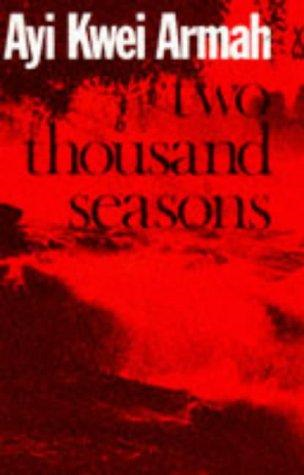
Two Thousand Seasons: An Excerpt

 image                                                                                                                                                                                              “You hearers, seers, imaginers, thinkers, rememberers, you prophets called to communicate truths of the living way to a people fascinated unto death, you called to link memory with forelistening, to join the uncountable seasons of our flowing to unknown tomorrows even more numerous, communicators doomed to pass on truths of our origins to a people rushing deathward, grown contemptuous in our ignorance of our source, prejudiced against our own survival, how shall your vocation’s utterance be heard?

This is life’s race, but how shall we remind a people hypnotized by death? We have been so long following the falling sun, flowing to the desert, moving to our burial.

In the living night come voices from the source. We go to find our audience, open our mouths to pass on what we have heard. But we are fallen among a fantastic tumult. The noise the hypnotized make, multiplied  by every echoing cave of our labyrinthine trap is heavier, a million times louder than the sounds we carry.

Hoarsened, we whisper our news of the way. In derisive answer the hurtling crowds shriek their praise songs to death. All around us the world is drugged white in a deathly happiness while from under the falling sun powerful engines of noise and havoc emerge to swell the cacophony. Against their crashing riot nothing whispered can be heard, nothing said. Indeed the tumult welcomes who would shot and burst the veins on his own neck. His message murdered before birth, the shouter only helps confusion.”

Two Thousand Seasons by Ayi Kwei Armah


Per Ankh

ImageNations Review

Order the Book

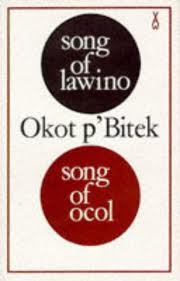
The Resurrecting Writers Series: Song of Lawino & Song of Ocol (Repost)

image Taking the book solely at face value, Song of Lawino & Song of Ocol are verses concerned with the disintegration of the marriage of Lawino, a rural African (Acoli) woman and Ocol, her western-educated husband. However, peeling back the cover of the words even a tiny bit reveals a woman committed to her indigenous culture versus a man who thinks that her culture needs to be removed from the face of the earth. How could two such people co-exist in the same household? How could two such differing ideologies co-exist on the same planet? According to Ocol, not at all. His song is full of imagery that calls death upon the culture Lawino praises in her song.

We will smash

The taboos

One by one,

Explode the basis

Of every superstition,

We will uproot

Every sacred tree

And demolish every ancestral

shrine.

In Ocol’s song, the thing that is so striking about this book – the use of indigenous Acoli symbols to present a woman solidly rooted in her culture – gets turned on its head. Every thing African becomes associated with death, decay and other imagery meant be extremely negative. However, that is not the case with Lawino. Unlike she does not hate foreign customs. They are simply not hers.

I do not understand

The ways of foreigners

But I do not despise their

Customs.

Of course if things were as simple as that, there would be no need for Lawino to sing her song. For instance, I agree with Ocol’s installing of an electric stove in their house. . Lawino doesn’t know how to use it and is, in fact, scared of it.

I am terribly afraid

Of the electric stove,

And I do not like using it

Because you stand up

When you cook.

Who ever cooked standing up?

And the stove

Has many eyes

I do not know

Which eye to prick

So that the stove

May vomit fire

And I cannot tell

Which eye to prick

So that fire is vomited

In one and not in another plate.

Instead of patiently teaching Lawino the benefits of the stove and how to properly use it, Ocol rails against her. He considers her lack of knowledge one more African deficiency he wants to divorce himself from. His attitude is revealing especially because he later becomes a leader of his country’s independence struggle for Uhuru (freedom). As Lawino tells it, Ocol says

White men must return

To their own homes,

Because they have brought

Slave conditions in the country.

He says

White people tell lies

That they are good

At telling lies

Like men wooing women

Ocol says

They reject the famine relief

Granaries

And the forced-labour system.

After revealing this, Lawino goes on to question an Uhuru where her husband can’t even get along with his brother.

When my husband

Opens a quarrel

With his brother

I am frightened!

You would think

They have not slept

In the same womb,

You would think

They have not shared

The same breasts!

And they say

When the two were boys

Looking after the goats

They were as close to each other

As the eye and the nose,

They were like twins

And they shared everything

Even a single white ant.

Even more astute however, is her statement describing the period of “independence”.

Independence falls like a bull

Buffalo

And the hunters

Rush to it with drawn knives,

Sharp shining knives

For carving the carcass.

And if your chest

Is small, bony and weak

They push you off,

And if your knife is blunt

You get the dung on your

Elbow,

You come home empty-handed

And the dogs bark at you!

In raising questions that center around the concept of post-colonial independence and how such an entity impacts on the consciousness of Africans who have been educated outside of africa as well as rural Africans who have never left the continent, the Song of Lawino & the Song of Ocol ranks up there with Ama Ata Aidoo’s Sister Killjoy. Both Sissie and Lawino were asking the same questions. The current state of the continent provides the answer.

thomas sankara on the emancipation of women

Our women must not pull back in the face of the many different aspects of their struggle, which leads them to courageously and proudly take full charge of their own lives and discover the happiness of being themselves, not the domesticated female of the male. Today, many women still seek the protective cover of a man as the safest way out from all al that oppresses them. They marry without love or joy, just to serve some boor, some dreary male who is far removed from real life and cut off from the struggles of the people.

Often, women will simultaneously demand some haughty independence and at the same time protection, or even worse, to be put under the colonial  protectorate of a male. They do not believe that they can live otherwise. No. We must say again to our sisters that marriage, if it brings society nothing positive and does not bring them happiness, is not indispensable and should be even avoided.

Let us show them our many examples of hardy and fearless pioneers, single women with our without children, who are radiant and blossoming, overflowing with richness and availability for others-even envied by unhappily married women, because of the warmth they generate and the happiness they draw from their freedom, dignity and willingness to help others.

Women have shown sufficient proof of their ability to manage the home and raise children – in short, to be responsible members of society – without the oppressive tutelage of a man. Our society is surely sufficiently advanced to put an end to this banishment of the single woman. Comrade revolutionaries, we should see to it that marriage is a choice that adds something positive, and not some kind of lottery where we know what the ticket costs us, but have no idea what we will end up winning. Human feelings are too noble to be subject to such games.

Excerpted from Thomas Sankara Speaks

Links and Things

One of the blogs I follow is Kinna Reads. Today I received in my inbox the following: Link Gems. The gems included Chimamanda Adichie on Ama Ata Aidoo, an essay about the relationship between Toni Morrison’s Beloved and Homer’s Odyssey. As someone who finds herself interested in the interplay of European classics and Black literature, the last is particularly interesting to me. Both are excerpted below.

Chimamanda Adichie on Ama Ata Aidoo:

Aidoo is too good a writer to paint with overly broad brush strokes. She does not suggest that the past was perfect, and there is no romanticising of culture. Instead, she bears witness to the realities of the time, her vision clear-eyed and pitiless, her role simply that of a truth-teller. Aidoo has a fantastic sly wit and humour. She never hits you over the head with any ‘message’, but after you have greedily finished each story, you sit back and realise that you have been through an intellectual experience as well.

Her Story Next to His: Beloved and The Odyssey:

Beloved certainly does not wear its Odyssey on its sleeve as brazenly as do O Brother or Ulysses, and, perhaps unlike those works, it can be read insightfully without reference to Homer. On the other hand, the connections between the Odyssey and Beloved in no way diminish Morrison’s novel. Instead, the similarities and differences between the works accomplish something important. By making Beloved a reworking of the Odyssey, Toni Morrison puts her story next to Homer’s—placing the lives and struggles of African Americans past and present into an epic context. She places these experiences alongside a story that is central to Western civilization, thereby asserting their own worthiness and importance in that tradition.

Born of the rocks, of the sea spume


“I recently read Diwata, the most recent book of poems by Barbara Jane Reyes (published 2010 by BOA Editions. I found it a many-layered, profoundly moving work. Like Reyes’s earlier book Poeta en San Francisco (which I’ve written about previously in this blog, here), Diwata weaves together multiple undercurrents of experience and perception, mingling creation stories from the biblical Genesis and from Philippine/Filipino tradition, together with moments from the history and politics of imperial colonization in the twentieth century.”

Source

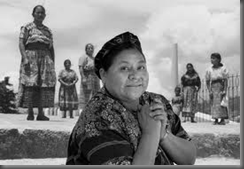
Rigoberta Menchu

Rigoberta Menchu Tum

Biography:

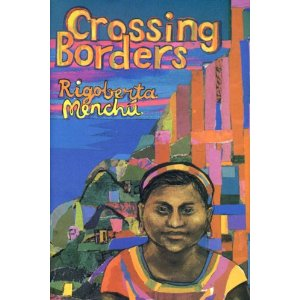
Rigoberta Menchú Tum (born 9 January 1959, Laj Chimel, El Quiché, Guatemala) is an indigenous Guatemalan, of the K’iche’ ethnic group. Menchú has dedicated her life to publicizing the plight of Guatemala’s indigenous peoples during and after the Guatemalan Civil War (1960–1996), and to promoting indigenous rights in the country. She received the 1992 Nobel Peace Prize and Prince of Asturias Award in 1998. She is the subject of the testimonial biography I, Rigoberta Menchú (1983) and the author of the autobiographical work, Crossing Borders. Later, American anthropologist David Stoll visited Guatemala and uncovered evidence that some of the claims presented in Menchú’s Nobel Prize-winning testimonial were inaccurate or false.

Menchú is a UNESCO Goodwill Ambassador. She has also become a figure in indigenous political parties and ran for President of Guatemala in 2007.

In 2009 she was involved in the newly founded party Winaq.(source)


Books:

image

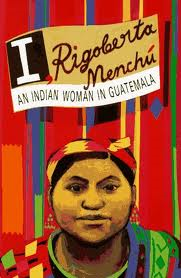
These interviews – conducted in Spanish, a language she has spoken for only three years – center on her role as a Quiche woman. Born in the mountains of Guatemala into the Quiche, one of twenty-three mestizo groups, Rigoberta Menchu tells the story of the Quiche fight to keep the Guatemalan gov’t and big-business people from stealing any more of their land: "This is my testimony. I didn’t learn it from a book and I didn’t learn it alone… My personal experience is the reality of a whole people."


                                                                                                                                                                                             imagePart memoir, part political manifesto, this impassioned testimony by the Guatemalan Maya human-rights activist and winner of the 1992 Nobel Peace Prize is a stirring sequel to her 1984 autobiography, I, Rigoberta Menchu.

Book Review: Half of a Yellow Sun

Historical fiction is one of my favorite genres – as I frequently approach history through literature. So it was with excitement that I opened Half of a Yellow Sun by Chimamanda Adichie. I knew next to nothing about the backdrop to the novel, the Biafra war. I definitely didn’t know that it was Igbo-based. However, understanding my lack of knowledge, I took what Ama Ata Aidoo wrote in Our Sister Killjoy to be true; that Nigeria "not only has all the characteristics which nearly every African country has but also possesses these characteristics in bolder outline".

I have to admit I was a bit thrown for a loop when the Biafran characters would talk about Nigeria and Nigerians as The Other. Then I remembered a discussion I had with someone about Watch for Me on the Mountain by Forrest Carter. In that book, a fictional rendering of Geronimo’s life, Mexicans were consistently referred to in the negative. I didn’t get that either until I was made to understand that Mexico, as a country, was imposed on Indigenous people from without. Once I understood that, the negative perception of Mexico made a whole lot of sense. It was the same with Nigerian and Nigerians. I have to admit, though, to a little discomfort in understanding (and potentially agreeing with) the Biafran struggle for Independence from Nigeria. After all, one of the giants of African Independence, Kwame Nkrumah, believed strongly in a United States of Africa. Half of a Yellow sun raised questions such as should such a structure be based on the 1885 carving up of Africa?

Originally, I had planned to write an intricate review. However, I must admit, that reading the book soon became a chore. It wasn’t due to book being well over 500 pages. Even though the story was very interesting, the writing itself was unable to hold my interest for a sustained amount of time. Considering all the publicity Adichie has received, I expected a literary masterpiece.Now, don’t get me wrong. It is definitely worth reading; especially for folks like me who look at literature as more than just a good story. It just dragged at several points during the read.

The Resurrecting Writers Series – Home Girls: A Black Feminist Anthology


Roaming the blogosphere as I am wont to do, I came across a challenge on calyx press’ blog. Of course, at 43, I do not qualify as a “young feminist” (if I ever did) but still it set me to thinking about my intentions to write a review of Home Girls: A Black Feminist Anthology.

To a young woman unanchored, on the verge of being culturally divorced from self, the anthology was one of a series of buoys clung to and devoured like I was a member of the Donner party – not the daughter of Salma. Comprising both poetry and prose, the book represents discussions black women were having with other black women – and society in general – about what it means to be a black woman. The scope of the conversation is wide-ranging. It includes the Combahee River Collective Statement which includes articulations such as

This focusing upon our own oppression is embodied in the concept of identity politics. We believe that the most profound and potentially most radical politics come directly out of our own identity, as opposed to working to end somebody else’s oppression. In the case of Black women this is a particularly repugnant, dangerous, threatening, and therefore revolutionary concept because it is obvious from looking at all the political movements that have preceded us that anyone is more worthy of liberation than ourselves. We reject pedestals, queenhood, and walking ten paces behind. To be recognized as human, levelly human, is enough.

I’m not entirely clear on the concept of identity politics. However, it does strike me as the essence of self-determination to push your own cause. In the case of black women, the cause should be black women. Home Girls is one of the spots along my literary reading history where I realized it was acceptable, revolutionary even, to come out from the background, open my mouth and express my full self.

Home Girls is also where I first encountered the work of poet Kate Rushin. Her poem, the Black Back-ups,

is dedicated to Merry Clayton, Cissy Houston, Vonetta Washington, Dawn, Carrietta McClellen, Rosie Farmer, Marsha Jenkins and Carolyn Williams. This is for all of the Black women who sang back-up for Elvis Presley, John Denver, James Taylor, Lou Reed, Etc, Etc, Etc.

This is for Hattie McDaniels, Butterfly McQueen, Ethel Waters
Saphire
Saphronia
Ruby Begonia
Aunt Jemima
Aunt Jemima on the Pancake Box
Aunt Jemima on the Pancake Box?
AuntJemimaonthepancakebox?
auntjemimaonthepancakebox?
Ainchamamaonthepancakebox?
Aint chure Mama on the pancake box?

Mama Mama
Get offa that damn box
And come home to me

And my Mama leaps offa that box
She swoops down in her nurse’s cape
Which she wears on Sunday
And on Wednesday night prayer meeting
And she wipes my forehead
And she fans my face for me
And she makes me a cup o’ tea
And it don’t do a thing for my real pain
Except she is my Mama
Mama Mommy Mommy Mammy Mammy
Mam-mee Mam-mee
I’d Walk a mill-yon miles
For one o’ your smiles

This is for the Black Back-ups
This is for my mama and your mama
My grandma and your grandma
This is for the thousand thousand Black Back-ups

And the colored girls say*

After reading this poem, I couldn’t hear Lou Reed’s Walk on the Side as just a song. Instead, it now expressed a relationship where the talent and artistic skill of black women is used to enrich other artists – musically as well as economically. It’s Big Mama Thornton and Elvis played out all over the cultural landscape. Or would be – except that Big Mama’s daughter wants her mother and wrote a poem about it; a poem which changes the dynamic landscape of understanding.


* © 1983 Donna Kate Rushin

books to movies but not vice versa


today, while roaming through netflix, disgrace with john malkovich caught my eye. i’ve seen the movie and later learned it was a book by j.m. coetzee. Even though the book descriptions describe the interlude the main character, a white south african (boer?) professor had with a female student as “seduction”; in the film, she is unambiguously raped. I saw unambiguously because she clearly does not participate and/or enjoy the encounters. such a dynamic would make disgrace a very interesting book to read and review.

whenever i think of books to movies topping the list is always the godfather it’s long been a tendency of mine to read the books of movies i’ve seen. so of course, i’ve read the godfather by mario puzo. i think that was one of the first book-movie combos where the movie was better then the book. one of the most profound differences is that, in the book, Kay didn’t leave Michael. For his soul’s sake or some such reasoning, she decided to stay.

i thought the switch between the book having her stay and the movie having her divorce michael was due to awareness of the feminist movement on the filmmakers part.

an interesting note re: the godfather. initially, coppola didn’t want to direct the movie. once he decided to take the job, the studio fought him on casting (they didn’t want al pacino), directing decisions, etc.

I would discuss beloved – the movie but well, that was just a disaster.