Happy Birthday, Yng Blk Star

Today is my son’s 12th birthday. 12 years! Time flies and flies! Motherhood has, of course, changed me…for the better. Over the years since I’ve become a Mother, I have seen a lot of things that assault what it means, for me, an African woman who is consciously single, to be a Mother. Be clear, when I say consciously single, I mean that. I ended my marriage but not my interaction with his dad (my was-band). It was after our divorce that I got pregnant. His dad and I discussed remarrying and my answer was a resounding no!

Don’t get me wrong. I still have love for his dad. We went through a lot together…and apart…and there is no other man in the world, if it was possible to go back and re-choose, that I would have chosen to be my child’s father. I recognized, even at that stage when my child (aka fetus) wasn’t formed enough to move inside me, that two different things were at play. There was the relationship of a man and a woman. And there was the relationship between father and child. I believed then and still believe now that it’s wasn’t necessary for his dad and I to be together in order for his dad to have a relationship with our child.

Still, I was a womanist and when I found out I was carrying a boy, I sat in the ultrasound room and cried my heart out. Of course, now I look back and say “that was hormones”. But still, I had spent a lot of time and emotional energy deciding on a name for a girl. I was convinced, in my heart of hearts, that I was going to give birth to a girl. Still bound by a patriarchal understanding that women can’t raise boys to manhood, I wasn’t at all happy about the fact that my child was going to have a penis!  So I cried, something I do only when I am extremely upset!

But then the day came. When I felt the first contraction, I immediately gave up any idea of giving birth naturally and said “give me the epidural”. I look back now and say “you punk, you were so scared of the pain, you allowed the nurses to give you a shot in your spine” and said shot numbed me so much I was unable to feel my legs, let alone “push”. And the white female doctor, who was so unfamiliar with black women’s health issues, that she had to look up, in my presence, what it meant that I carried the sickle cell trait, decided, eventually, that she would have to bring my child into the world through a Caesarian. And she also gave me a scar I haven’t been able to eradicate to this day; presumably because black people heal unlike white people…

Still, I love that scar and I love the boy I gave birth to. I realized, pretty quickly, that my womanist bent meant I was more qualified, emotionally and culturally speaking, to be a mother of a boy than I was of a girl. In other words, I wasn’t a “girly girl”. I don’t wear makeup. Whenever I wear a dress or a skirt, people in my circle feel it necessary to exclaim and exalt me for doing so as if a dress or a skirt suddenly demonstrates to them that I possess a vagina; even though I do so whenever the weather is conducive. I don’t torture my feet by wearing what I call “hooker heels”.

I used to agonize about the above like it meant that I was, inherently, deficient in feminine qualities (aka “ain’t I a woman?”). And then I had a conversation with a now-former Sister-friend and said conversation resulted in me saying “I’m okay and have been for quite a while”. I realized that it wasn’t me that was deficient. The motherhood model was what was deficient.

Once I realized, and embraced that I was and continue to be, able to raise a boy to manhood. I realized that all the patriarchal/hotep folks who were very vocally against women raising boys weren’t against it because they doubted a woman’s ability. They were against it because they disagreed with the kind of man women such as I were raising. We weren’t (and are not) raising our boys (they don’t consider the girls) to be the Barack Obama version of Kaitlyn Jenner. (Ponder that for a moment)

As I routinely state on my private (friends only) Facebook page, I am raising a man, not a slave. And as my child (and I) celebrate his twelfth year of existence in a country where black children can’t play in a park without being murdered by those who are alleged to “protect and serve”, I give thanks to all I am that enables me to do so (raise a man, not a slave).

So…happy, happy bornday (he was born, I gave birth) to my very, very beloved yng blk star. May you continue to thrive and grow…and define for yourself what it means to be you!



Gospel

i.

discordant
never/
polyrhythmic
like life
we were/
in the beginning/
many feet make many sounds

we took the tree
and made it talk/
a jungle of sounds
we produced
everyone for miles around
heard it
gravitated towards it

then strangers came
chanting like gregor
tolling the bell
like igor

creating a cacophony
a frankenstein sound
that we ran from/
the reverberation of our feet
and the clamor of our pursuers
disturbed the serenity of the forest
forever

ii.

our feet were forced
to wade in the water
and the god the strangers proclaimed
didn’t trouble the waters
enough

we moaned
a sound as new to us
as the clang of metal when we shifted
as the strangely accented voices
ordering us to stop the dirges

but we couldn’t stop
even after the ship docked
even after survival dictated
that we scale down our humanity.

Out of our misery grew the gospel.


Excerpted from my first book, In the Whirlwind.

©2006 Tichaona Munhamo Chinyelu

Why I Teach White History Month in February

The title and first few paragraphs will have you, dear readers,  thinking I’ve lost my damn mind. But keep reading.  This is one of the loveliest articles I’ve read in a long time.


teleSUR English is an alternative representation for world news. we focus on the people, the common citizen, stories untold by traditonal media. you will only find them at teleSUR.

Source: Why I Teach White History Month in February

Older than Hip Hop

Before 16 bars imprisoned words,
before rhymes were as predictable
as a cop’s nightstick upside your head,
my pen positioned itself
in the continuum of black words.

Shaka Zulu and Uhuru
are the main threads of my weave
so there’s no need for me to loom
larger than sacred life.

I’ll leave that to you and you and you
while my words through the needle go
attempting to be part of the quilt
reconnecting the unraveled threads of black life.

I’m not a superstar.
I’m just a star shining alongside my fellow stars.
Together, we illuminate what’s right
and I like it like that.
So you and you and you
can keep on masturbating to finger snaps
while I read ngugi
trying to decolonize my mind
so that my words can turn into wombs
breeding the fire next time.

Blerd Mom Chronicles

Urban dictionary describes “blerd” as such:

A nerd who is of African American decent [sic]. A BLack-nERD.
Turk: “My cousins a blerd”
Carla: !?!?!
Turk: A black nerd.

Based on their definition I am not a blerd because I am not of “African American decent [sic]”. It’s not necessary to go into my ancestry. Suffice it to say that at 48, none of the elders in my family were born in America. So I may not be a “nerd who is of African American descent [sic]” but I am a black nerd, a blerd.

My son, who is, partly, of African American descent, agrees; pointedly and comically. The other day, when I was near the completion of a marathon session of watching all seven seasons of Buffy the Vampire Slayer (something I do every once in a while),  I told him that watching Jessica Jones reminded me of Buffy and Buffy reminded me of Jessica Jones so I would be watching both series of Jessica and Buffy again. He hugged me, thus cementing his reputation as the “huggingest boy in the world” and showed me (with his finger) the tear he was “shedding” because his mom was turning into a nerd. I’m African-centered so of course I corrected him: “blerd not nerd”.

Recently, the huggingest boy in the world has surpassed the previous holder of World Record of number of hugs given in the space of sixteen minutes. And he achieved that stature as a result of his delight at my pointing him toward Black Nerd Problems. We bonded over this article: Ancestry For Nerds: How I Found My Blerd Roots Hiding in Plain Sight. I was regaled with tales of racist encounters he has has in gameville: “Oh, I didn’t know your people like sci-fi”. “I’m not racist. I love the character of Guinan on Star Trek. She was so magical and feisty”.

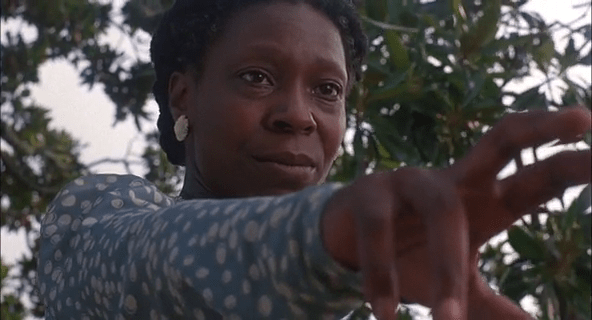
(I thought to myself they don’t know about the Color Purple Whoopi.)

I said “yeah and I bet those are the same people who objected to John Boyega playing Finn in the latest Star Wars movie or a Black actress playing Hermione or  Rue in The Hunger Games being black.” The minute I mentioned Rue and the Hunger Games, I knew it was confirmed that I am indeed numbered among the blerd universe. My son knew it too and we did the thing that is fundamental to our family: we laughed.

Genealogy of a Colony, Author’s Reflection

In the Introduction to this series, I wrote about how I was fascinated by the Great Dismal Swamp. I didn’t include that I also desired to write a verse novel but I was intimidated for a variety of reasons: my limited poetic knowledge of the forms and techniques writers I admire (Derek Walcott) used for their verse novels/epics. Plus, my previous books length collections have been full of pieces that were created individually with no thought of the cohesion a novel type book requires.

But what I realized both on my own and after reading this article about Idea Debt. Simply put, Idea Debt is defined thus:

Idea Debt is when you spend too much time picturing what a project is going to be like, too much time thinking about how awesome it will be to have this thing done and in the world, too much time imagining how cool you will look, how in demand you’ll be, how much money you’ll make. And way too little time actually making the thing.

I’ve spent the past few years writing this in drips and drabs…and mentally engaging with it and its concept; to the point that I was allowing it to hold me back and stymie other writing projects in the works. After reading that article, I realized I was correct in publishing the pieces online so that they could move out of my creative space and thereby free it up.

I feel validated by the likes the series has gotten so far although some constructive comments would also be nice! So, thank you, reader for reading this and I hope you like where I take it (or it takes me!)


Genealogy of a Colony: Harry, Black Loyalist

It was heady
the overheard talk
as one beast of burden
held another
for George
to ride to a Congress
where Henry was going
to wax poetic
about liberty and death

But I didn’t really need their talk
to know about freedom.
I just had to remember
what life was like before
on the Senegambia.
Life there was pagan
and imperfect
but it wasn’t chained,
branded or hobbled;
and my skin color wasn’t a disease
actively legislated against
by people who believed
in the Curse of Ham.

So when the British said
if we reach them, we would be free
I forswore being enslaved
to a future first president.

It wasn’t the first time I ran
but it was the first time
I was successful.


Last Page


Related Links:

Black Loyalists

Cassandra Pybus – Epic Journeys of Freedom


Genealogy of a Colony: Matrimonial Matters

1.

William Byrd married
a 21-year-old widow
whose dead husband
was the son
of a former governor
of Virginia.
She agreed
that William’s first son
would be named
after him;
a heritage the son wore so proudly
he went on to become
the future founder of Richmond.

2.

William Byrd, the son, married Lucy,
one of two daughters
of Daniel Parke
who holds the honor
of being the only British
colonial governor to be lynched
out of existence.

Lucy’s sister married John Custis
and they had one son
Daniel Parke Custis
the first husband of Martha Washington.
3

Daniel died and left Martha
17,500 acres, 300 slaves
and control of the inheritance
of two of their children still alive
and two years after he died
Martha married George.

When George was eleven
his father died
and he inherited ten slaves.
In the Virginian scheme
of things
ten was middling, minor;
certainly not enough to recast(e) him
into the upper echelons
of plantation society

Martha brought George great wealth
and George bought land and more slaves
before sailing across the Delaware
to a future first presidency.


Next page