My Balcony Garden

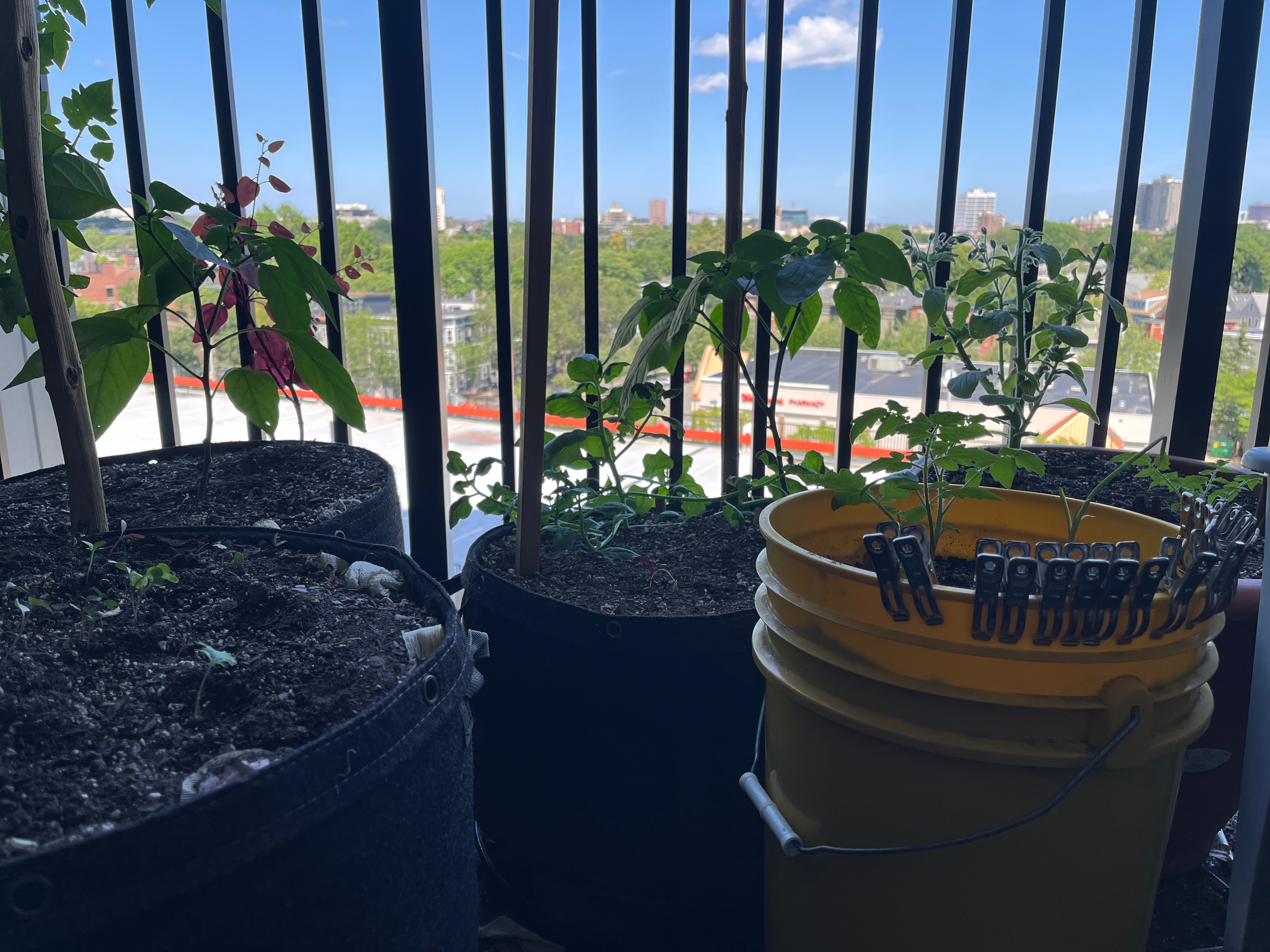
Abbreviated view of my balcony garden. Just as water is life, so is sticking my hands in soil. This summer, I am growing 6 chili plants, New Zealand spinach, tomatoes, borage (pictured) and red orach (a voluteer). I’ve also started seedlings for my fall garden (brassicas). Not pictured is the ginger I thought would decompose but instead took root. I am very proud of my garden as this year shows my patience has increased. Never before have my chili plants got to the point of producing peppers! For the past few years, I have been buying dried chilis to make my own chili powder. The reality that I’ll soon be able to make that powder from my own homegrown peppers is incredibly freeing…and a sustainable practive that drives me crazy with delight! The plan is to dry the chilis and grind into powder as needed. I hope to have enough to last through to next spring when I will start the process all over again but this time with allium (onions and garlic) powder.

Notes on a Novel: Dr. Lorenzo Johnston Greene

Since I’ve been busy not paying attention to this blog, I have progressed beyond Writing the Bones, my previous segment on the writing of my 1st conceptual verse novel. The skeleton is solidly formed and now it’s time to put meat on the bones, so to speak. The next segment, in my progression, will be based on the pages upon pages of handwritten notes on the book whose title I’ve narrowed down to three choices.

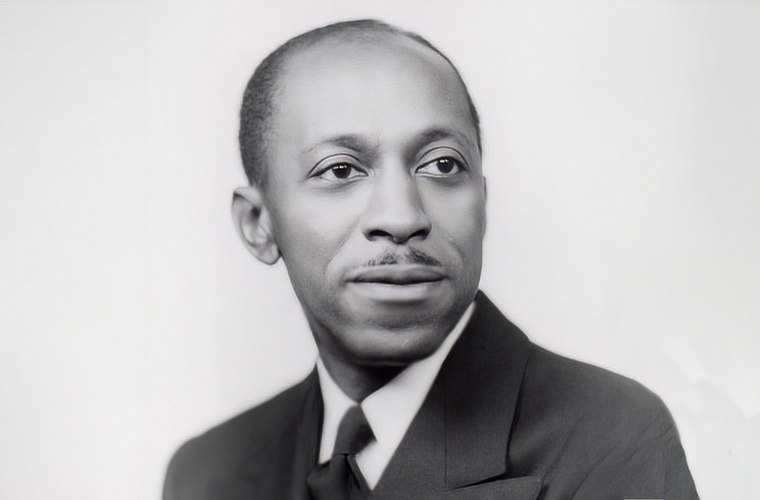
One of the characters in my book is Dr. Lorenzo Johnston Greene, historian. Dr. Greene published a book called The Negro in Colonial New England. Even though I went to elementary, middle and high school in Boston, this book was never part of any curriculum I encountered; not even in my year and a half at Emerson College. I don’t remember exactly how I came across this very informative (read detailed) book. It was either in a semi-recent history class at a local university or it was in Wendy Warren’s book, New England Bound: Slavery and Colonization in Early America. Either way, it was recent enough to be pissed that I was in my early 50’s when I found out about his scholarship, which is impeccable, btw.

But that anger is for another potential post about the state of education in this country. The purpose of this post is to discuss, somewhat, the role he plays in my novel. He is an angel to use Christian parlance. He is also a time traveler who uses his angelic abilities and his training as a historian to resolve a matter that had needled him in his professional life. In The Negro in Colonial New England, the matter that concerns him enough to affect his afterlife is nothing but a one line footnote. That disturbs him because the matter involves a rape. However, his chosen profession is limited by the tenets of histography and requires a poet to contextualize the pieces missing from the historical record. So he functions as a historian and a buffer against what he calls the poets “Africanist flights of fancy”.

It’s definitely a balancing act, navigating between the poet and the historian; especially since I like the poetic bits more!

That’s all for this week. Next week, I’ll talk about a different character.

Writing the Bones: World Building

World building. It recently threw me for a loop identifying that that is what I am doing with my work in progress. It also excited me but this post is not about that aspect. It threw me for a loop because I’m usually write poems that say something about my life, experiences and/or history. The only connection between those poems is me; whereas with a verse novel, the connection has be between the characters themselves. It seems simple like “of course, the characters have to be connected in a novel, verse or not!” But, as I said, that has not been my experience. So it’s kind of intimidating but also points the way forward.

With world building, there is no actual limit except for a lack of imagination. One off lines and phrases which had long been languishing in a “place” called Google Docs found homes in pieces I had no idea that they would fit in. It is extremely fascinating watching the characters filling out rooms, speaking their experiences, etc. Even more so, when I discovered the newly incorporated bits and pieces transformed the novel and my writing of it. 

Before the transformation, the writing was kind of laborious; which, for me, is a sure sign something’s not right. The language wasn’t inspiring me like it did with exploring like or Nonsense Makes Sense

After the transformation, the writing flows; mainly because of the bits and pieces that found a home in the forming manuscript. 

World building is new, exciting and inspiring. Giving thanks…that I’m still living, still learning as a writer.

Honoring Malcolm X (with poetry)

Flora and Fauna

I wanted to bless my eyes this morning
with flora and fauna
so I came in from the cold
of a dream full of unrelenting rain
and opened my eyes to what is customarily
my second sighting of the day:

My ideological father
shot down in the Audubon ballroom
where the only bird observed in motion
was the misappropriated eagle

until the phoenix rose
from the ash of a murderous minstrel show
and transformed into a panther

which prowled
oakland to wounded knee
philadelphia to palestine
roaring revolution
until every generation
generated an evolution
of the message

thought to be dead forever
by those who are as white as the bones
of the myriad numbers of people
whose deaths they are accountable for.

© 2006 Tichaona M.Chinyelu
Beauty

Beauty is in the eye of the beholder
And I be holding beauty

When I glance upon them

Theoretically shaping
The future into an afro

Concentric sharpness

That shook
The white power structure

Into confronting
A black consciousness
Organized with a mandate
And a mission

To dismiss

That old time religion
That said
Everything in its place
Especially the black race.
A new paradigm of blackness
Rooted in a community soliloquy.
Ghetto equals colony
And racism is the bastard child
Of fascist economies.
Fanon, Malcolm and James
Became antidotes
For antiquated theologies
And anti-social pathologies.

In the belly of the imperialistic beast,
In the microcosm of prisons
And the macrocosm of the streets
A new paradigm for blackness,
A paradise of struggle
Was created by young soldiers
High school students,
Whores and pimps,
Drug dealers and NASA employees,
Doctors and number runners
Heady
Ready
And willing
With
Fuck that shit.
Far too many fires lit
From Watts to the Congo

Whitey gotta go

Burn baby burn
No ashes in the urn
Time for the tide to turn
And put an end to the yearn.

Discern

Panther power was here
Turned the police into pigs
And nigs into blacks

Figuratively burning effigies
With tactics and strategies
That earned them freedom's mind.

exploring like

don’t ask me how i like it
cause i like it like that
like lauren velez

sticky sweet like honey
amped like espresso
diaphanous like weed smoke
rock solid like
ashford and simpson

phosphorous like venus
everlasting like ever-ready
comical like cedric
digging dogs like dmx
diggedy diggedy like das efx
between the sheets like isley
my hip bone connected
to my erogenous zone

quiet storm like mobb deep
number 1 like nelly
soul on a train like don cornelius
ton of reggae like don omar
dirty like reggie
boss like beanie
eat the apple like eve

lady like fela dem song
me wan piece of meat fore anybody
african woman go dance
me go dance the fire dance

yin like yang
contra like contradiction
change up like chance

generous like kikuyu
split the bean three ways
ballistic like missile
brave like heart
war like zulu
righteous like malcolm
love like assata
write like ngugi

warm like fire
fiery like habanero
love you like bess
dangerous like tosh
murder like she wrote
look for me like marcus
don’t kill me like osama

end like this

formulate my thoughts like philosophy

Gorée Island Ghosts (Chapter 1-3): awakening

I. 

that sensation again

the magnetic pull of ocean sediment
settling on   forming   my skeleton

the ghosts of those thrown overboard
collecting melanin deposits from the atlantic's floor

sending it to me in waves
giving my skeleton the skin it lacks

monetaria moneta yielding up its protective shells
giving me eyes of cowrie, the whites like porcelain


II. 

I light gardenia incense
for the flower in Lady Day's hair.

Talk to plants sensitive to the vibrations
that accompany her visitation.

Open my windows to untethered wind
to roam as is its wont.

I can breathe.

Oxygen is an angel in my personal pantheon.


III.

The door of no return is a fallacy
I think
as she forms in my mind
small, bathed in indigo
eyes gleaming like the shells
adoring my wrist.

The river niger flows from her tongue
shards of spanish slashing the surface
the closer to the atlantic
her body was borne.

I offer her my smile, my name
and lineage
situating myself at the end 
of her continuum.


What you have just read are the introductory poems of my currently unnamed verse novel. I plan on serializing it here, online, sort of like what was done with Charles Dickens’ novels in the 19th century. New chapters will be uploaded biweekly.

Writing the Bones, Entry 2

. . . the Second of October, about 9 of the clock in the morning, Mr. Mavericks Negro woman came to my chamber window, and in her own Countrey language and tune sang very loud and shrill, going out to her, she used a great deal of respect toward me, and willingly would have expressed her grief in English; but I appre- hended it by her countenance and deportment, whereupon I repaired to my host, to learn of him the cause, and resolved to intreat him in her behalf, for that I under- stood before, that she had been a Queen in her own Countrey, and observed a very humble and dutiful garb used towards her by another Negro who was her maid. Mr. Maverick was desirous to have a breed of Negroes, and therefore seeing she would not yield by perswasions to company with a Negro young man he had in his house; he commanded him will’d she nill’d she to go to bed to her, which was no sooner done but she kickt him out again, this she took in high disdain beyond her slavery, and this was the cause of her grief.
—John Josselyn, Two Voyages to New England, 1674 Source

This unnamed woman is the subject of my novel. I am haunted by the thought that there has to be more to her than “the cause of her grief.” But the historical record provides nothing and possibly never will. So I decided to take Toni Morrison’s advice and write the book I want to read. Since it is a haunting, I’ll be writing it as a kind of ghost story. However, one person’s ghost is another person’s ancestor. To quote Miriam Makeba:

In the West the past is like a dead animal. It is a carcass picked at by the flies that call themselves historians and biographers. But in my culture the past lives. My people feel this way in part because death does not separate us from our ancestors. Source

But before we start, we must follow protocol and awaken her.

Diary of a Writer, vol. 2

Sometimes, the process of writing doesn’t require you to put pen to paper or click away at the keyboard. Sometimes, it involves sitting still on the balcony, looking at cars going where they’re going; looking at the sky and skyline; noticing the trees are an arcing line of shadow at night, scarier, almost, than the way lights are always blinking away the dark – from the casino a city or two away to the red flickering lights on top of buildings just a hop, skip and jump away from where I am.

Sometimes writing involves reading. Escapist lit. Or not. Sometimes, it involves reading about books you want to get but instead look at the growing pile of unread books surrounding you, and just click save before you get consumed by paper like poor Tuttle here:

Sometimes writing involves a stream of consciousness blog post on writing, full of run on sentences and a woeful lack of lyricism just because…

Writing the Bones, Entry 1

Writing a novel is harder than I ever conceived! I’ve written and published books of three books of poetry but those books are full of personal poetry arranged chronologically. They’re linear rather than a cohesive whole like a novel.

When I first got the idea of writing a novel, I spent years typing down whatever came to mind and only casually organized them in Google Docs. Then, being a poet, I decided it had to be a verse novel and/or epics. I started reading to gain a sense of the genre.

I read The Epic of Gilgamesh, the David Ferry translation; Sundiata: An Epic of Old Mali; The Epic of Askia Mohammed, etc. After reading Gilgamesh and Sundiata, I came away with a new book idea centered about one of the women mentioned in Sundiata. As a womanist, it was disturbing, to say the least, how rape played a role in both epics but was treated both briefly and casually. I started thinking about how there are no epics where women are centered. So I spent even more time typing out an outline for that future story/book.

I read Jacqueline Woodson’s Brown Girl Dreaming; tried to read both Derek Walcott’s Omeros and Kwame Dawes’ Prophets. Of the three, Brown Girl Dreaming was the most approachable. The beginning of Omeros contains a poem about the cutting down of trees to make canoes. Have you ever eaten anything that was so good, so rich, you couldn’t finish it and told yourself you’d save it for later but never do; because when you go to eat, you’re still full off of the memory of how good it was? That’s that poem, a portion of which was excerpted here. I think I was too full of that one poem in Omeros to give Prophets the attention it deserves. Plus, by that time, I was burnt out on reading the genre.

That was years ago. Today, literally and figuratively, I am in writer’s mode and writing a verse novel is hard. One of the difficulties I’m encountering is the setting of the novel. It’s set in Massachusetts Bay Colony in the 1630’s. How to cross the language barrier because their English is not the English of today. Then, there’s my main character, an enslaved woman, unnamed in the historical record, who was probably one of the victims of English privateers (legalized piracy) pillaging the ships of England’s greatest competitor of the time, Spain and it’s settler-colonies in the Caribbean/South America. Because of the relative earliness of her being enslaved, she undoubtedly spoke her mother’s tongue; maybe even picked up a few Spanish words on the brutal trip to what is inexplicably called the New World.

I assumed I would have to build a language for her so we could communicate. More research was called for! I did a Google search for Spanish-African creole. I figured that just like with English, there would be a language created out of the experience of the enslaved and I was right! In Colombia, there’s a region called San Basilio de Palenque. Known as the “first free town in the Americas,” I was delighted to hear about the language the inhabitants speak as the island in the Caribbean my main character was Providence Island, now under the domain of Colombia; even though the language might be dying from underuse, it was a step forward. Or so I thought. Poetry to the rescue:

small stones of spanish skimming
the surface of her speech
the closer to the atlantic
her body was forced