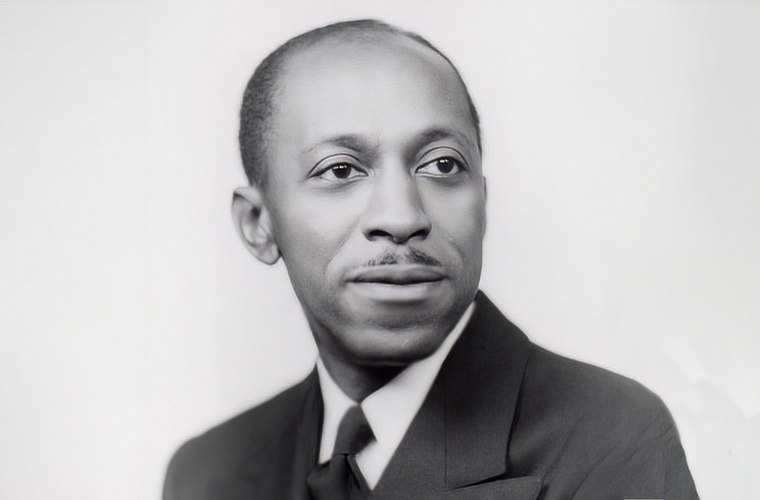
Notes on a Novel: Dr. Lorenzo Johnston Greene

Since I’ve been busy not paying attention to this blog, I have progressed beyond Writing the Bones, my previous segment on the writing of my 1st conceptual verse novel. The skeleton is solidly formed and now it’s time to put meat on the bones, so to speak. The next segment, in my progression, will be based on the pages upon pages of handwritten notes on the book whose title I’ve narrowed down to three choices.

One of the characters in my book is Dr. Lorenzo Johnston Greene, historian. Dr. Greene published a book called The Negro in Colonial New England. Even though I went to elementary, middle and high school in Boston, this book was never part of any curriculum I encountered; not even in my year and a half at Emerson College. I don’t remember exactly how I came across this very informative (read detailed) book. It was either in a semi-recent history class at a local university or it was in Wendy Warren’s book, New England Bound: Slavery and Colonization in Early America. Either way, it was recent enough to be pissed that I was in my early 50’s when I found out about his scholarship, which is impeccable, btw.

But that anger is for another potential post about the state of education in this country. The purpose of this post is to discuss, somewhat, the role he plays in my novel. He is an angel to use Christian parlance. He is also a time traveler who uses his angelic abilities and his training as a historian to resolve a matter that had needled him in his professional life. In The Negro in Colonial New England, the matter that concerns him enough to affect his afterlife is nothing but a one line footnote. That disturbs him because the matter involves a rape. However, his chosen profession is limited by the tenets of histography and requires a poet to contextualize the pieces missing from the historical record. So he functions as a historian and a buffer against what he calls the poets “Africanist flights of fancy”.

It’s definitely a balancing act, navigating between the poet and the historian; especially since I like the poetic bits more!

That’s all for this week. Next week, I’ll talk about a different character.

Writing the Bones: World Building

World building. It recently threw me for a loop identifying that that is what I am doing with my work in progress. It also excited me but this post is not about that aspect. It threw me for a loop because I’m usually write poems that say something about my life, experiences and/or history. The only connection between those poems is me; whereas with a verse novel, the connection has be between the characters themselves. It seems simple like “of course, the characters have to be connected in a novel, verse or not!” But, as I said, that has not been my experience. So it’s kind of intimidating but also points the way forward.

With world building, there is no actual limit except for a lack of imagination. One off lines and phrases which had long been languishing in a “place” called Google Docs found homes in pieces I had no idea that they would fit in. It is extremely fascinating watching the characters filling out rooms, speaking their experiences, etc. Even more so, when I discovered the newly incorporated bits and pieces transformed the novel and my writing of it. 

Before the transformation, the writing was kind of laborious; which, for me, is a sure sign something’s not right. The language wasn’t inspiring me like it did with exploring like or Nonsense Makes Sense

After the transformation, the writing flows; mainly because of the bits and pieces that found a home in the forming manuscript. 

World building is new, exciting and inspiring. Giving thanks…that I’m still living, still learning as a writer.

exploring like

don’t ask me how i like it
cause i like it like that
like lauren velez

sticky sweet like honey
amped like espresso
diaphanous like weed smoke
rock solid like
ashford and simpson

phosphorous like venus
everlasting like ever-ready
comical like cedric
digging dogs like dmx
diggedy diggedy like das efx
between the sheets like isley
my hip bone connected
to my erogenous zone

quiet storm like mobb deep
number 1 like nelly
soul on a train like don cornelius
ton of reggae like don omar
dirty like reggie
boss like beanie
eat the apple like eve

lady like fela dem song
me wan piece of meat fore anybody
african woman go dance
me go dance the fire dance

yin like yang
contra like contradiction
change up like chance

generous like kikuyu
split the bean three ways
ballistic like missile
brave like heart
war like zulu
righteous like malcolm
love like assata
write like ngugi

warm like fire
fiery like habanero
love you like bess
dangerous like tosh
murder like she wrote
look for me like marcus
don’t kill me like osama

end like this

formulate my thoughts like philosophy

Writing the Bones, Entry 2

. . . the Second of October, about 9 of the clock in the morning, Mr. Mavericks Negro woman came to my chamber window, and in her own Countrey language and tune sang very loud and shrill, going out to her, she used a great deal of respect toward me, and willingly would have expressed her grief in English; but I appre- hended it by her countenance and deportment, whereupon I repaired to my host, to learn of him the cause, and resolved to intreat him in her behalf, for that I under- stood before, that she had been a Queen in her own Countrey, and observed a very humble and dutiful garb used towards her by another Negro who was her maid. Mr. Maverick was desirous to have a breed of Negroes, and therefore seeing she would not yield by perswasions to company with a Negro young man he had in his house; he commanded him will’d she nill’d she to go to bed to her, which was no sooner done but she kickt him out again, this she took in high disdain beyond her slavery, and this was the cause of her grief.
—John Josselyn, Two Voyages to New England, 1674 Source

This unnamed woman is the subject of my novel. I am haunted by the thought that there has to be more to her than “the cause of her grief.” But the historical record provides nothing and possibly never will. So I decided to take Toni Morrison’s advice and write the book I want to read. Since it is a haunting, I’ll be writing it as a kind of ghost story. However, one person’s ghost is another person’s ancestor. To quote Miriam Makeba:

In the West the past is like a dead animal. It is a carcass picked at by the flies that call themselves historians and biographers. But in my culture the past lives. My people feel this way in part because death does not separate us from our ancestors. Source

But before we start, we must follow protocol and awaken her.

Diary of a Writer, vol. 2

Sometimes, the process of writing doesn’t require you to put pen to paper or click away at the keyboard. Sometimes, it involves sitting still on the balcony, looking at cars going where they’re going; looking at the sky and skyline; noticing the trees are an arcing line of shadow at night, scarier, almost, than the way lights are always blinking away the dark – from the casino a city or two away to the red flickering lights on top of buildings just a hop, skip and jump away from where I am.

Sometimes writing involves reading. Escapist lit. Or not. Sometimes, it involves reading about books you want to get but instead look at the growing pile of unread books surrounding you, and just click save before you get consumed by paper like poor Tuttle here:

Sometimes writing involves a stream of consciousness blog post on writing, full of run on sentences and a woeful lack of lyricism just because…

freestyle #2 (working my way back to you, love)

forty-six years
of diaspora living
and finally, i see
myself again.

forty-six years of living
and i refuse to apologize
anymore

unless i am wrong
and wrongness always
has a personal
and a political component

so goodbye, good riddance
and good luck.

i loved you once.
honestly.
as freely as i could
i loved you
and attempted to bring
the best of myself
to our relationship

but the best of me
is revolutionary
and in a non-revolutionary era
that is a form of suicide

and i refuse to commit to that.

forty-six years
of diaspora living
and finally, i see
and love myself

again.

How Elsie Became Tuyet

Elsie was a straight A student,
a dutiful daughter and a speaker
of three languages.
I was nothing of the sort
but still, we became friendly enough
that I was able to ask
why the French teacher called her
Tuyet.

Americans say its hard to pronounce.

I tested it on my one language tongue.
Tuyet.
Two syllables.
Elsie.
Two syllables.

I could see no difficulty
and so discarded Elsie.

When she told me that her family
decided that she is to marry
I remembered the teenage Haitian girl
who used to live across the hall.
Enamored with her boyfriend’s anatomy
she had names for various parts
and one of those named parts
led to a hurried wedding ceremony
at the local Seventh Day Adventist Hall
as well as her disappearance
from my life..

Back then, being called Haitian was worse
than being called nigger.
but I didn’t care.
She was cool and pretty
and made me not want to have sex.

Tuyet was cool and pretty
and also on the edge
of a disappearing act.

She left me
with a picture of herself
in a spring blue and white dress
and a pageboy haircut
that stands out
more than her face.

Frederick Douglass by Robert Hayden

When it is finally ours, this freedom, this liberty, this beautiful
and terrible thing, needful to man as air,
usable as earth; when it belongs at last to all,
when it is truly instinct, brain matter, diastole, systole,
reflex action; when it is finally won; when it is more
than the gaudy mumbo jumbo of politicians:
this man, this Douglass, this former slave, this Negro
beaten to his knees, exiled, visioning a world
where none is lonely, none hunted, alien,
this man, superb in love and logic, this man
shall be remembered. Oh, not with statues’ rhetoric,
not with legends and poems and wreaths of bronze alone,
but with the lives grown out of his life, the lives
fleshing his dream of the beautiful, needful thing.

Excerpted from Collected Poems of Robert Hayden

Kwame Ture on the Origin of Steel Bands

Sometime in the late 1930’s, the government in another of its persistent and futile attempts to suppress African cultural survivals, decided that the colony would more easily be governable if drums and other traditional musical instruments were outlawed. The colonials must have sensed, and correctly, the importance of music in the cultural independence and political resistance of the African masses. I would, of course, encounter this phenomenon again in the American South. But at least the George Wallaces and Ross Barnetts of that world never tried to outlaw our spirituals and freedom songs. Though I’m sure they must  have often wished they could have.

So in Trinidad by legislative fiat an African could be jailed for possession of drums and other musical instruments? Not a gun, not a grenade, or some dynamite, but a drum? I have often tried, and failed, to visualize the campaign to enforce that law. In implementation of this policy, did armed police and soldiers–the governor’s minions–surround African communities and conduct house-to-house searches? And for what, those threats to public order, drums, tambourines, maracas, and marimbas? Did they kick  down the doors to shacks with guns drawn: “Freeze. You’re under arrest. Seize that drum!”

So, suddenly deprived of their traditional instruments of musical expression, Africans resorted to their creativity and whatever materials lay to hand. In this case, the fifty-five-gallon steel drums used to store oil at the refinery.

These they took and cut to varying depths. Say nine inches down for an alto pan, two feet deep for a tenor pan, and twice that for a bass. Then on the top they would heat and pound out a number of raised areas, each of which when struck would produce a precise musical note of a certain pitch. Over the years the brothers experimented with ways to refine the basic instruments and to create others. The result is what is today known the world over as the Trinidad steel band: an ensemble of musical instruments of great range and flexibility, capable of playing not only calypso and other forms of local popular music, but the most complex and demanding of jazz compositions or any form from the European classical tradition you care to name. A sound immediately recognizable in the distinctive, liquid purity of tones and the fluency of its musical lines.

Hey, as you may have noticed, I can’t pretend to be an ethnomusicologist. I’m a revolutionary. But that description should give you a fairly accurate sense of the accomplishment represented by the creation of the steel bands.  And remember, this unique innovation and the musical tradition it evolved into came directly out of the determined and indomitable will of Trinidad’s African’s to resist colonization and to maintain their culture.

Excerpted from Ready for Revolution: The Life and Struggle of Stokely Carmichael (Kwame Ture)

Kendel Hippolyte on Reggae & Writing

Reggae for me is very much associated with the ’70’s, with a time of a lot of self-questioning, nationally, individually. And not just self-questioning, because also I think it was very much a time when people were open to ideas about what I will just loosely call the spiritual world, you know, the inner world. And there was a sense that both things were important – that is, making things right in the world of the here and now, the social world, kind of building a New Jerusalem impulse; and also the other important thing was attending to what was going on inside of you and becoming right, becoming what the rastaman referred to as the higher man, or the Iya-man. So yes, I think reggae was important in terms of keeping the significance of those two strands of living very alive and real and accepted and normal for a lot of us.

Excerpted from Talk Yuh Talk: Interviews with Anglophone Caribbean Poets, editor: Kwame Dawes